
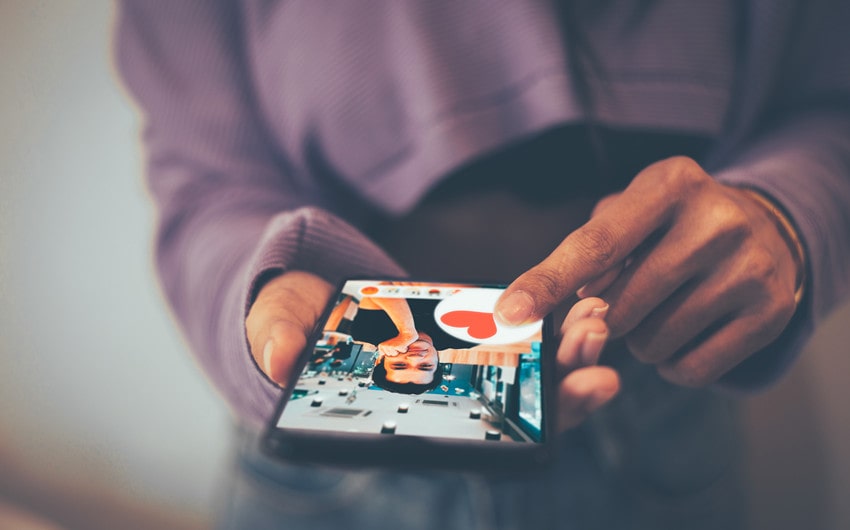
Can You Still Find Your Ideal Relationship As Dating Apps Falter?

Bumble cut 30% of its workforce in 2025. The company’s stock has dropped 92% from its peak, shrinking its market cap from $14.8 billion to $860 million. Match Group, the largest player in online dating, fell from $179 per share in 2021 to $30. These are not minor setbacks. The industry that promised to solve loneliness is bleeding users and money at an alarming rate.
So where does that leave you if you want a relationship?
The answer depends on how willing you are to abandon the habits that dating apps trained you to accept. Swiping became a reflex for millions of people. It became the default. That default is breaking down, and something else is taking its place.
The Numbers Behind the Decline
Ofcom reported that Tinder lost 600,000 users since 2023. Bumble dropped 368,000. Hinge shed 131,000. Grindr lost 11,000. Across the board, fewer people are paying for these services. Bumble’s total paying users fell 16% to 3.6 million in Q3 2025, and the company expects revenue to drop another 14% to 17% in Q4.
Match Group’s Q3 2025 earnings showed Tinder revenue declined 3%, though Hinge grew 27%. The company is squeezing more money from fewer users. Revenue per payer is up, but total payers are down. This is not a growth strategy. It is a survival tactic.
Gen Z is walking away fastest. A survey by the Kinsey Institute and DatingAdvice.com found that only 21.2% of Gen Z singles use apps as their primary way to meet people. Meanwhile, 58% said they focus on meeting in person. Dr. Justin Lehmiller, a senior research fellow at the Kinsey Institute, put it plainly: “For a generation raised on technology, most of them don’t actually seem to want to use technology to find love.”
Relationship Types Beyond the App
The decline in dating app usage has pushed some users toward more specific relationship structures. A person looking for an age-gap partnership or finding a sugar baby may skip mainstream platforms entirely and pursue their goals through niche services or social settings that cater to particular preferences. These alternatives allow people to state what they want without filtering through broad-use algorithms.
Others turn to curated events or private introductions. Speed dating nights, matchmaking services, and interest-based clubs offer paths that do not depend on swipe mechanics. The demand for intentional, direct connection has grown as general-purpose apps lose their hold on the dating market.
Why Gen Z Left
According to Deseret News, 79% of Gen Z report burnout from traditional dating apps. Josh Penny, Hinge’s social impact director, pointed to three reasons why younger people struggle to connect: the Covid-19 pandemic, smartphone use, and the disappearance of third spaces. “Look at the ways in which technology and social media have displaced how we spend our free time, and then Covid accelerated this trend even further,” he said in an interview with CNBC.
Third spaces are public places where people gather outside of home and work. Coffee shops, parks, community centers, bars. These places shrank during the pandemic and never fully returned for some. When you remove the casual environments where strangers might talk, you push people toward apps. When the apps disappoint, you leave them with nothing.
Gen Z inherited a broken system. They did not create it.
In-Person Alternatives Are Growing
Event attendance for in-person dating rose 42% from 2023 to 2024, according to SpeedMatchApp. Eventbrite saw a large increase in dating events across the UK since 2019. Speed dating, running clubs, and hobby meetups are pulling in people who want to skip the swipe.
Lunge Run Club, hosted by the Lunge dating app, started with 20 to 30 people in May 2024. Now it brings in 400 to 500 participants per event in Manhattan. Co-founder Steve Cole told CBS News, “Our first run started off with like 20 to 30 people, and now we have 400-500 people at our events, which is insane.”
Ilana Dunn, former content lead at Hinge, predicts more singles events, in-person master classes, and meetups as sentiment around apps shifts. Hinge and Bumble have both started hosting live events. They know their core product is losing ground.
Apps Still Work for Some
Dating apps have not become useless. According to data from Freedom for All Americans, 27% of couples who married in 2025 met on dating apps. Inside that group, Hinge led with about 36% of matches, followed by Tinder at 25% and Bumble at 20%.
An SSRS poll from February 2025 found that 65% of adults aged 18 to 29 have used dating apps at some point. Tinder remains the most commonly used at 46%, followed by Plenty of Fish at 29%, Bumble at 26%, and Match at 25%.
But usage does not equal satisfaction. Pew Research found that 48% of people who have used dating apps encountered at least one unwanted behavior: unsolicited sexual messages, continued contact after rejection, offensive names, or physical threats. About half of users describe their app time as positive. The other half do not.
AI Is Entering the Mix
The 14th annual Singles in America study, released in June 2025 by Match and the Kinsey Institute, surveyed 5,001 singles between ages 18 and 98. One finding stood out: 26% of singles now use AI to help with dating. That figure represents a 333% increase from the prior year.
People are using AI to write opening messages, suggest conversation topics, and review their profiles. Dr. Justin Garcia, chief scientific advisor to Match, said singles are “rejecting the one-size-fits-all approach to dating.” AI tools offer personalization that generic app algorithms do not.
This trend could reshape how people present themselves online. It also raises questions about authenticity. If your first message was written by a chatbot, what does that say about the conversation to come?
What You Can Do Now
If you want a relationship and apps have stopped working for you, the path forward requires effort. Join a club based on a hobby you already enjoy. Show up to running groups, book clubs, pottery classes, or volunteer shifts. These environments give you repeated contact with the same people, which builds familiarity and trust over time.
Speed dating and singles events are another option. They demand direct conversation without the safety net of a screen. That can feel uncomfortable. It is also faster than swiping for months without meeting anyone.
For those with particular relationship goals, niche services and curated introductions provide more precision. Matchmakers cost more than a subscription, but they filter for compatibility in ways algorithms do not.
The answer to the question in the title is yes. You can still find your ideal relationship. But the tools that once promised to make it easy are no longer reliable. The people finding success are the ones who stopped waiting for an app to deliver results and started building connections on their own terms.