
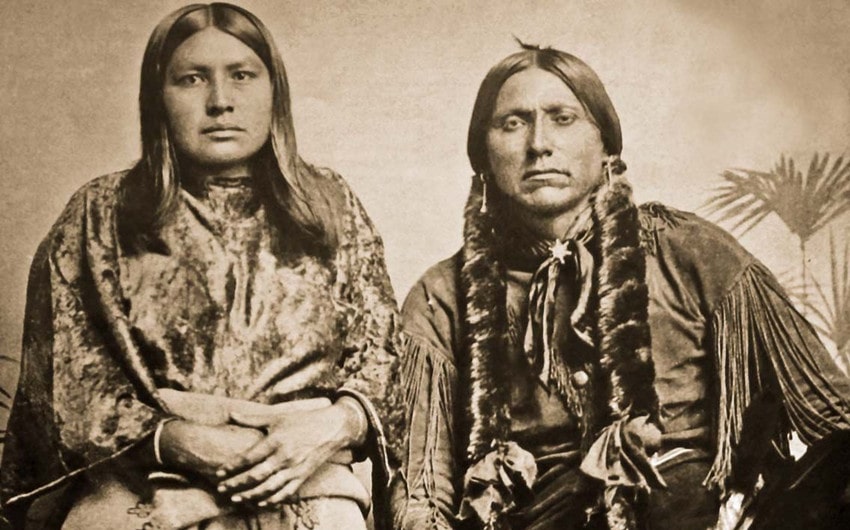
Quanah Parker Wife: The Women Behind the Last Comanche Chief’s Legacy

Quanah Parker remains one of the most fascinating figures in Native American history—a man who bridged two worlds during one of the most turbulent eras in the American West. As the last chief of the Comanche Nation, he led his people through their final years of resistance against U.S. expansion and their transition into reservation life. His story is filled with courage, intelligence, and adaptability. But behind the powerful leader stood several women who played vital roles in his life and legacy.
While historians often focus on his political and cultural achievements, the question many people ask is: Who was Quanah Parker’s wife? The answer isn’t simple—because, in fact, Quanah Parker had several wives throughout his life. Each woman contributed to his family’s strength, helping shape the legacy of one of the most important Native American leaders in history.
Who Was Quanah Parker?
To understand Quanah Parker’s marriages and family, it’s essential to know who he was and what he represented. Quanah was born around 1845 to Peta Nocona, a Comanche chief, and Cynthia Ann Parker, a white woman who had been captured as a child and adopted by the Comanche.
Cynthia Ann Parker’s story became one of the most famous in the history of the American frontier. Captured by the Comanche during the raid on Fort Parker in Texas in 1836, she assimilated into the tribe, married Peta Nocona, and had three children—one of whom was Quanah.
Quanah’s mixed heritage gave him a unique perspective that later helped him navigate the cultural divide between Native Americans and the encroaching white settlers. After his father was killed and his mother recaptured by Texas Rangers (where she eventually died in captivity), Quanah grew up within Comanche society but carried the trauma of loss throughout his life.
By the 1870s, as the U.S. government forced Native tribes onto reservations, Quanah emerged as a strong and diplomatic leader. He eventually became the principal chief of the Comanche Nation, guiding his people into a new era while preserving much of their identity and pride.
Quanah Parker’s Wives and Family Life
Quanah Parker’s personal life was as remarkable as his political one. Like many Comanche leaders of his time, Quanah practiced polygamy, a cultural tradition that was common among high-ranking men in the tribe. His multiple marriages were both personal unions and social alliances that strengthened relationships between families and clans.
Over the course of his life, Quanah had at least five to seven wives, though historical accounts vary. These women played vital roles in his household, raising his children, maintaining the family’s large home, and supporting his leadership responsibilities.
Among his wives, several are well-documented: Weakeah, Tonarcy, Toh-Tsee-Ah (Libby Parker), Mah-Cheeta, and Chony.
1. Weakeah Parker
Weakeah is often mentioned as Quanah’s first wife. Their marriage represented a traditional union within Comanche society, based on shared heritage and tribal expectations. She bore him several children and was considered one of his most loyal companions during his early years as a leader.
2. Toh-Tsee-Ah (Libby Parker)
Perhaps the most well-known of Quanah’s wives was Toh-Tsee-Ah, also known as Libby Parker. She was of mixed Comanche and Mexican descent, and her intelligence and grace made her one of Quanah’s most respected partners.
Libby became something of a household manager in their later years, helping maintain their large home—the Star House—in Cache, Oklahoma. The home was famous for its twelve-pointed star design on the roof and served as a social hub for Native leaders, U.S. politicians, and visiting dignitaries.
It’s said that Libby helped Quanah adapt to the expectations of white society, assisting in organizing events and managing guests as the chief worked to bridge the gap between cultures.
3. Tonarcy and Mah-Cheeta
Two of his other wives, Tonarcy and Mah-Cheeta, were also influential within his household. While less is known about them individually, they were part of his close-knit family network and were responsible for raising many of his children.
Polygamy, in Comanche culture, was not seen as a source of rivalry or jealousy but rather as a structure of cooperation. Each wife had her own dwelling space and shared responsibilities within the family.
The Star House and Family Life
Quanah Parker’s home, known as the Star House, remains one of the most iconic landmarks of his legacy. Built in the late 19th century near Cache, Oklahoma, it was a symbol of his ability to blend Native and Western lifestyles.
The home was large enough to accommodate his multiple wives and many children—reports suggest he fathered at least 20 children. The wives managed household operations, cooking, child-rearing, and welcoming visitors.
Quanah’s household was well-respected in both Native and white circles. Guests such as President Theodore Roosevelt, cattlemen, and U.S. military officials visited the Star House, often marveling at how the Comanche chief had adapted to reservation life without surrendering his cultural pride.
Despite the blending of cultures, Quanah continued to honor his Comanche traditions. His family often participated in tribal ceremonies, and his wives and children were raised to understand both Native and Western ways of life.
Children and Descendants
Quanah Parker’s many children went on to play important roles in both Native American and American society. Some of the most notable among them include:
- White Parker – Became a Methodist minister and missionary who worked to bring education and faith to Native communities.
- Baldwin Parker – Followed in his father’s footsteps as a leader and diplomat for the Comanche Nation.
- Wanada Parker (Snow) – Became known for her beauty and grace; she often represented the family at public events and ceremonies.
- Harold Parker – Worked to preserve his father’s legacy and the Star House for future generations.
The descendants of Quanah Parker continue to play a vital role in the Comanche Nation and beyond, promoting cultural preservation, education, and heritage. His lineage includes educators, artists, and public leaders who carry forward his vision of harmony between traditions.
The Influence of His Wives on His Leadership
Quanah Parker’s wives were not just companions—they were key figures in his ability to lead effectively. In Comanche society, women were deeply respected for their wisdom, resourcefulness, and influence within family life.
Each of his wives contributed to his leadership in different ways: providing him with emotional stability, managing his household, raising future leaders, and maintaining alliances across the community. Their collective presence gave him the strength and balance he needed to manage the challenges of leadership during a time of enormous change.
His home life symbolized his leadership philosophy—bringing together different people and traditions in harmony.
Quanah Parker’s Blended Identity
Quanah Parker’s relationships also mirrored his own dual identity. As the son of a Comanche warrior and a white woman, he represented the merging of two worlds. His marriages reflected this balance—rooted in Comanche culture but also adaptable to new realities.
He embraced modernity while honoring tradition, wearing tailored suits yet maintaining his long braids, participating in Christian ceremonies while also being a prominent advocate for the Native American Church and the use of peyote in spiritual practices.
Through his wives and children, Quanah preserved the Comanche spirit while navigating the challenges of assimilation and modernization.
Final Years and Legacy
Quanah Parker died on February 23, 1911, at his home near Cache, Oklahoma. He was buried beside his mother, Cynthia Ann Parker, in the Post Oak Mission Cemetery near Cache. His legacy endures as one of resilience, wisdom, and adaptation.
The story of Quanah Parker’s wives is inseparable from his own. Together, they formed a family that stood at the crossroads of history—representing both the fading era of the Plains Indians and the emerging modern identity of Native America.
Their lives remind us that even the greatest leaders rely on the support, strength, and love of family. The women who shared Quanah’s life were not merely figures in his shadow—they were the foundation upon which his legacy was built.
Featured image source: Pinterest