Creating Safer Bathroom Spaces for Plus‑Size Bodies

For individuals with larger bodies, bathrooms can present unique safety challenges. Standard fixtures and layouts are often ill-suited to plus-size users, increasing the risk of injury and making daily routines more difficult. A safer bathroom doesn’t require a full remodel—it requires the right mix of supportive equipment, durable fittings, and accessible design tailored to the user’s needs.
Use of Bariatric Toilet and Seating Solutions
Toilet safety is a major concern for plus-size users. Standard toilet seats often feel unstable, with narrow dimensions and limited weight capacity. Upgrading to bariatric toilet solutions is one of the most effective ways to reduce the risk of falls and improve comfort during use.
There are various bariatric toilet seat options for safer bathroom use that feature wider seating surfaces, reinforced frames, and non-slip feet. Raised toilet seats with armrests can assist with sit-to-stand movements, while heavy-duty over-toilet aids can accommodate users weighing 200 kg or more. These aids typically include adjustable leg heights, steel construction, and removable splash guards for hygiene. They’re also suitable for use over existing toilets, making them practical for retrofitting into home bathrooms.
Installing Walk-In Showers and Bariatric Shower Chairs
Traditional bathtubs are not well-suited for larger bodies. Climbing over high bath edges can be dangerous, particularly for those with limited balance or reduced mobility. Replacing tubs with walk-in showers that feature level access flooring reduces this risk significantly.
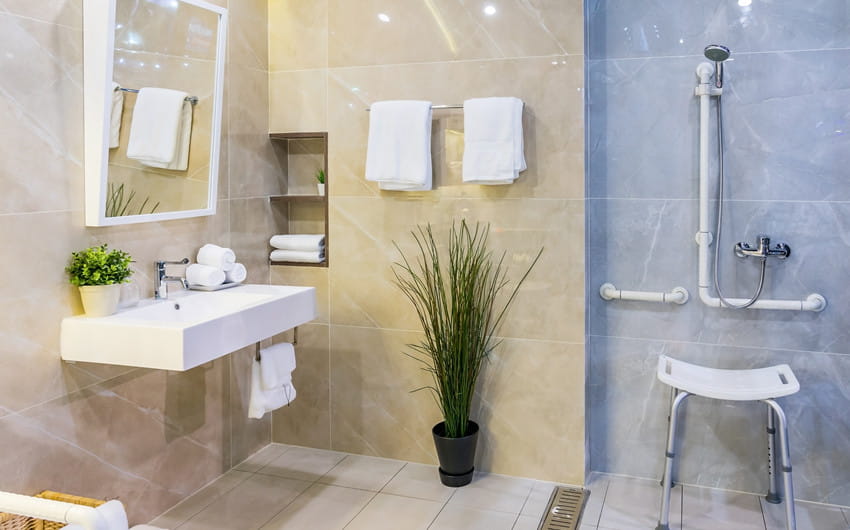
Within the shower area, bariatric shower chairs or transfer benches provide a safe seating option. Look for models with wider seats (up to 600 mm), backrests, armrests, and reinforced frames rated up to 250 kg or more. Non-slip rubber tips on chair legs prevent movement, while open seat designs allow for personal hygiene without standing. Pairing this with a handheld shower head on a sliding rail gives the user greater control and reduces the need to twist or reach awkwardly.
Wall Reinforcements and Grab Rail Placement
Standard grab rails are not always suitable for higher-weight users. When installing grab rails for plus-size individuals, it’s essential to use reinforced wall fixings and rails that are specifically tested for bariatric use—ideally with a load rating of at least 175 kg.
Grab rails should be strategically placed:
- Beside the toilet for sit-to-stand support.
- Along the length of the shower for balance when moving in or out.
- Near the basin to assist with bending or standing.
Angled grab rails or rails with textured surfaces can improve grip, especially in wet conditions. Reinforcing wall studs or using wall-mounting plates ensures these supports remain secure under load.
Flooring, Lighting and Sink Accessibility
Flooring is a common hazard in bathrooms for elderly Australians, especially where water is present. According to fall statistics, these measures address risks causing over 1.2 million hospital bed days annually for Australians 65+, with one in three experiencing a fall yearly and rates spiking to 10,264 hospitalisations per 100,000 for those 85+; bathrooms rank high-risk due to water, contributing to 17 daily injury deaths among older adults.
Fitting slip-resistant vinyl flooring with a soft finish helps prevent slips and provides some cushioning in the event of a fall. Avoid tiles with gloss finishes, and use coved edges to reduce trip hazards.
Bright, even lighting is equally important. LED downlights with minimal shadowing improve visibility, especially for those with poor vision. Motion sensor lighting can be useful for nighttime access without needing to locate switches.
For sink use, wall-mounted basins without cabinets underneath allow better access for seated users or those using mobility aids. Installing adjustable-height sinks or mixer taps with extended levers also simplifies washing without excessive reaching or bending.
Facilitating Safe Transfers and Carer Support
Where personal assistance is needed, the bathroom must also accommodate carers safely. Tight spaces and standard equipment can increase the risk of injury to both parties. Providing mobile commodes, wide-seat transfer benches, or floor-mounted support poles gives carers more control and reduces manual handling strain.
For users with severely limited mobility, ceiling-mounted hoists or freestanding gantries can assist with safe lifting and transfer between the toilet and shower. In less complex cases, pivoting toilet chairs or height-adjustable over-toilet frames may provide sufficient support while preserving the user’s privacy and dignity.
Practical Changes That Protect Dignity and Safety
By incorporating these targeted solutions, designed specifically with plus-size individuals in mind, bathrooms can be transformed into safer, more functional spaces. The goal isn’t luxury or appearance; it’s ensuring safety, comfort, and dignity for those who rely on these spaces every day. Thoughtful adjustments, grounded in real needs, make all the difference.