Why Is It Difficult to Date in 2026?

Dating in 2026 takes longer, costs more, and resolves less often than it did five years ago. The math behind that statement is now documented across financial surveys, app usage data, and longitudinal studies on relationship formation. Singles are spending more per date, going on fewer dates, and reporting higher rates of fatigue from the platforms that were supposed to make pairing easier. The problem is structural rather than personal, and the data trail behind it has grown long enough to make that case directly.
Several forces are pulling in the same direction. Cost increases, app saturation, and harder partner selectivity each have their own data trail, and reading them together explains why so many people who want a relationship are not finding one. The same period has produced a parallel boom in matchmaker firms, relationship coaches, and slower-paced dating services, suggesting that demand for connection has not declined even as the dominant channels for finding it have weakened.
The Numbers Behind the Burnout
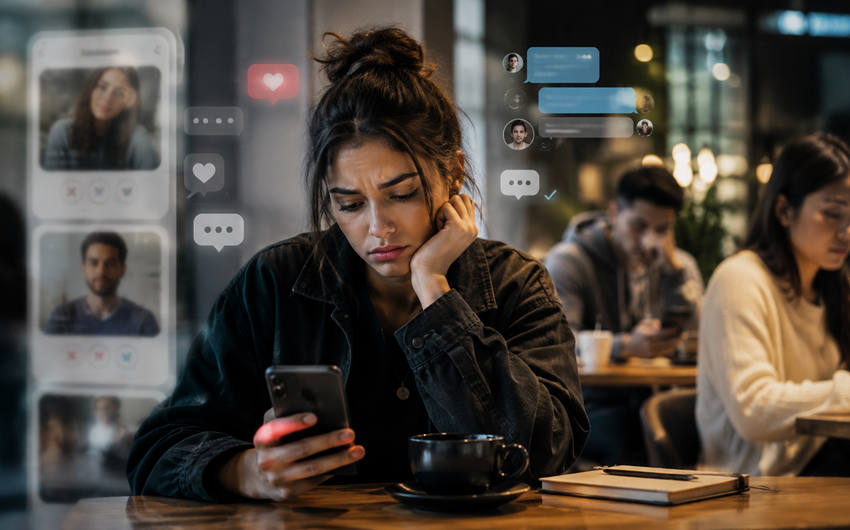
A 2026 Hily survey on dating fatigue places overall app burnout at 78% of users. Gen Z reports the highest rate at 79%, with women at 80% and men at 74%. The same survey lists the leading causes as a lack of meaningful connection (40%), disappointment (35%), rejection (27%), and repetitive conversations (24%). The fatigue is widely distributed across age and gender lines, though it concentrates in younger users and in women. Reports of unwanted contact and unsolicited images among young women correlate with their faster departure from the platforms. Burnout rates also rise sharply with usage duration, suggesting the issue grows worse the longer a person stays on the apps.
User numbers track the same trend. A 2024 Ofcom report found Tinder lost 594,000 UK users between May 2023 and May 2024, Hinge dropped 131,000, and Bumble dropped 368,000. Those declines began before 2026 and have continued. The exodus targets the platforms, while in-person meetups and matchmaker firms are absorbing much of the leftover demand. Paid human matchmaking has effectively grown into a service tier that the apps once held without competition.
Hypergamy and Modern Partner Selection
Hypergamy describes the tendency to select partners of higher social or economic standing. A 2012 cross-national survey of 8,953 respondents across 37 countries reported that more gender-equal countries record fewer asymmetric preferences, while less equal contexts retain stronger upward selectivity in education and earnings.
Modern dating reflects this in mixed ways. Research on hypergamy finds users initiating contact with partners 20% to 30% more desirable by income or status proxies than themselves, yet British data show marrying up has fallen since the 1950s as women’s earnings caught up. The pattern persists, though its intensity varies.
The Cost of a Night Out
The 2026 BMO Real Financial Progress Index puts the average all-in cost of a date in America at $189, including grooming and transport. That figure is a 12.5% rise from $168 in 2025. The U.S. Bureau of Labor Statistics measured general CPI growth of 2.7% across the same period. Date prices climbed roughly five times faster than the basket of goods used to track inflation. Categories often associated with a night out, such as food away from home at 4.1% growth and recreation at 3.0%, rose far more slowly than dating-specific spending.
The behavioral response is visible in the same data. 47% of singles say dating is no longer financially worth it. Half report going on fewer dates or choosing cheaper activities. The average American went on 12 dates in the past year, down from 14 in 2025. For Millennials, the average per-date cost is now $252, a 32% jump from the previous year. Americans collectively spent an average of $2,323 on dating-related outings across the past 12 months. First dates alone average $93 per person, with each side expecting roughly the same in return.
Algorithm Fatigue and Mismatched Expectations
Apps were marketed as a solution to the friction of meeting people. The behavioral data show they introduced friction of a different kind. The 2026 Hily survey identifies decision fatigue as a top driver of burnout, with users describing the volume of potential matches as paralyzing rather than helpful. The paradox of choice, well documented in consumer psychology, applies in full to romantic selection. When every option remains visible, no option feels final, and the cost of foregoing the next swipe is rarely offset by commitment to the current one.
The disconnect between message and meeting compounds the problem. Conversations that read well in text often produce no chemistry in person. Users encounter heavily edited photos and mismatches between stated and actual interests. Across a series of unsuccessful dates, the psychological effects of rejection exact a measurable cost on self-esteem, which itself reduces willingness to keep trying. CNN’s reporting in January 2026 summarized the consensus by stating that Gen Z is tired. Global Dating Insights tracked a corresponding rise in inquiries to professional matchmakers across the same quarter, with several firms reporting waitlists for the first time in their operating history.
The behavioral data on first-meeting outcomes are equally lopsided. A typical app user reports that fewer than one in ten matches result in an in-person meeting, and fewer than one in three of those meetings produce a follow-up date. The cumulative ratio means a heavy app user can swipe through hundreds of profiles per month and still log only one or two actual dates. That ratio has worsened year on year since 2022.
A Bifurcated Dating Economy
The cost data reveal two populations rather than one. 14% of Americans now report that an average date costs them nothing, up from 12% a year earlier. At the opposite end, 14% report dates costing $300 or more, up from 11%. The middle is thinning. People are opting out of paid dating activity or accepting that dating sits inside a luxury budget, and movement between those two camps appears limited. The low-cost group is leaning on parks, hikes, museum free days, and home-cooked meals. The high-cost group is keeping the steakhouse and the cocktail bar.
Half of Gen Z and 40% of Millennials report the cost of dating as a direct obstacle to other financial goals, such as housing or savings. The result is a population deferring romantic effort the way previous generations deferred home purchases. Dating has joined the list of life events being pushed later by financial pressure rather than by personal preference, and the demographic effects of that delay will register in census data well before they register in personal accounts. Marriage rates, first-child age, and household formation are all tracking the same downward curve.
The Source of the Difficulty
Dating in 2026 is harder because the inputs have changed. Costs have climbed faster than wages. Apps have eroded user trust faster than they can rebuild it, and selectivity has tightened in measurable ways that the data on user-initiated contact and partner preferences both confirm.
The difficulty represents a set of conditions documented across multiple datasets, and the better someone reads those conditions, the more accurately they can plan around them. The fix, where one exists, sits less in trying harder on broken channels and more in choosing different channels altogether.
People who have already made that pivot, toward in-person meetups, professional matchmakers, and slower-paced dating formats, are reporting better outcomes for less money. The data does not predict an easier year ahead, but it does point toward a smarter set of choices for anyone willing to step away from the default route.