Elijah Muhammad Net Worth: Why the Real Story Is More Complex Than a Single Number

Elijah Muhammad’s net worth is difficult to pin down because he was not a modern celebrity with a neatly documented personal fortune. He was the longtime leader of the Nation of Islam, and the wealth associated with his name was often tied to the movement’s businesses, property, schools, and financial institutions rather than to a clearly published private balance sheet. That makes this a historical wealth story shaped less by one personal number and more by the scale of the empire built under his leadership.
Who Was Elijah Muhammad?
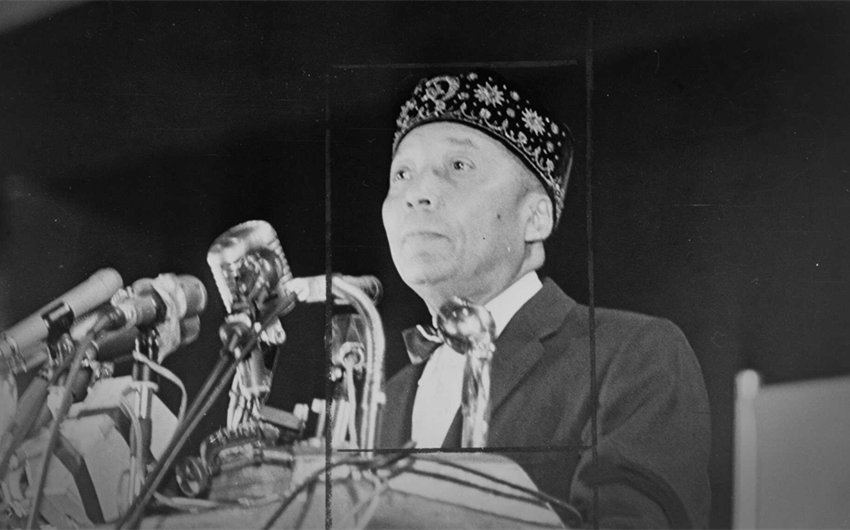
Elijah Muhammad, born Elijah Poole, was one of the most influential religious leaders in twentieth-century Black America. He was born in Georgia, grew up in a sharecropping family, and moved to Detroit in the 1920s, where he later became involved with Wallace Fard’s movement. After Fard disappeared in 1934, Elijah Muhammad rose to the top of what became the Nation of Islam and built Chicago into its main center of power.
Over the following decades, he transformed the organization from a small movement into a national force. His message combined religion, Black nationalism, discipline, and economic self-reliance. That last piece matters most in any discussion of net worth. Elijah Muhammad did not become widely known only because of sermons or public influence. He became associated with an expanding economic system that included farms, stores, publishing, schools, and real estate.
That is why his wealth cannot be discussed in the same way as the net worth of an entertainer or business executive. His financial story sits at the intersection of personal property, organizational control, and symbolic power.
Elijah Muhammad’s Estimated Net Worth
There is no universally verified public figure for Elijah Muhammad’s personal net worth, and any article that presents one exact number as settled fact is overstating the historical record. The more responsible conclusion is that his personal fortune remains uncertain, while the economic reach of the Nation of Islam under his leadership is much easier to document.
During the early 1970s, Elijah Muhammad told followers that the Nation of Islam had a net worth of $75 million. By the time of his death in 1975, later historical accounts of the organization’s economic program described the Nation of Islam as being worth about $80 million overall. Those figures are important, but they refer to the movement and its enterprises, not to a fully verified personal estate owned outright by Elijah Muhammad himself.
So what is the clearest answer to the search term “Elijah Muhammad net worth”? It is best to say that his exact personal net worth is unknown, but he stood at the center of a multimillion-dollar religious and business empire. In practical terms, that means his financial legacy was substantial, even if the private portion of that wealth cannot be separated with complete precision from the institutions he led.
Elijah Muhammad Net Worth Breakdown
The Nation of Islam’s Business Empire
The strongest part of Elijah Muhammad’s wealth story is the business system built under his leadership. The Nation of Islam promoted economic self-reliance from its early years, and by the 1960s and 1970s that philosophy had become a broad commercial network. The organization operated bakeries, grocery stores, restaurants, clothing-related businesses, and other ventures designed to keep money circulating within Black communities.
This was not a side project or a symbolic talking point. It was central to how Elijah Muhammad framed power. Economic discipline, ownership, and internal institution-building were treated as part of the movement’s mission. That helped turn the Nation of Islam into something much larger than a religious body. It functioned as an organized economic force with visible business infrastructure in multiple cities.
One of the best-known examples was Muhammad Speaks, which became one of the movement’s most profitable enterprises. Its national circulation gave the organization both revenue and influence, reinforcing the fact that Elijah Muhammad’s legacy was tied to systems of production and distribution as much as to preaching.
Land, Housing, and Real Estate
Real estate also played a major role in the wealth attached to Elijah Muhammad’s name. The Nation of Islam’s broader economic plan involved farmland, commercial property, and housing. Its three-year economic drive in the 1960s helped expand ownership of land and commercial establishments, including farms and food-related businesses that supported the group’s self-sufficiency model.
At the personal level, later estate litigation makes clear that Elijah Muhammad was connected to valuable residential property in Chicago. A Seventh Circuit tax case described four houses on East 49th Street that he had purchased after first acquiring the lots in the mid-1960s. That detail matters because it shows that discussions of his wealth were not purely abstract or symbolic. There were real assets linked directly to him, even if they do not produce a clean final personal net worth figure on their own.
Still, these properties illustrate the central difficulty in valuing his fortune. They show personal holdings, but they do not resolve the larger question of how much of the surrounding wealth was private and how much was embedded in the Nation of Islam’s institutional structure.
Banking, Employment, and Institutional Scale
By the 1970s, the Nation of Islam had moved beyond neighborhood businesses into a more ambitious level of institution-building. In 1973, the organization gained a controlling interest in Guaranty Bank and Trust Company in Chicago. Historical accounts say the bank held more than $10 million in assets by 1975 and employed more than 500 people under Nation of Islam management.
That kind of development changes how readers should think about Elijah Muhammad’s net worth. He was not simply the head of a movement with a few storefronts. He presided over an organization that had grown into a large employer, a property owner, a publisher, and a financial actor. By 1975, historical accounts describe the Nation of Islam as operating hundreds of businesses in the United States and employing more than 11,000 people.
Those figures do not prove an exact personal fortune, but they do explain why Elijah Muhammad was widely seen as the leader of one of the most economically powerful Black organizations in the country.
Books, Teachings, and Intellectual Reach
Elijah Muhammad’s wealth story also includes his published works and the authority they carried. Books such as Message to the Blackman in America and How to Eat to Live helped extend his influence beyond mosques and meetings. They turned his ideas into durable products that could be circulated, sold, and preserved long after his lifetime.
These books were not the main engine of the financial empire associated with his leadership, but they mattered. They helped solidify his role as both a religious authority and a public figure whose ideas shaped the movement’s culture, discipline, and public identity. In that sense, they contributed less to a simple cash estimate and more to the lasting value of his institutional reach.
In the end, Elijah Muhammad’s net worth is best understood as a layered historical question. His exact personal fortune remains uncertain, but the scale of the Nation of Islam under his leadership is not. He was tied to major real estate, profitable enterprises, publishing, education, and banking, all of which point to serious wealth and influence. The most accurate conclusion is not that Elijah Muhammad left behind one neatly verified personal number, but that he led a multimillion-dollar movement whose economic footprint became one of the defining parts of his legacy.
Featured Image Source: https://www.pbs.org/wgbh/americanexperience/features/malcolmx-elijah-muhammad-and-nation-islam/