
How Do Cold Food Supply Chains Work?

When you grab milk from a refrigerated case or pick up frozen vegetables from a neatly stocked freezer, you probably don’t think about everything that had to happen for that product to reach you. But keeping food cold isn’t a simple matter of plugging in a refrigerator at the store. It’s a coordinated chain of temperature control that starts way before the supermarket ever receives a shipment.
Cold food supply chains — often called the “cold chain” — are designed to maintain consistent temperatures from the point of production all the way to the retail shelf. If that chain breaks at any point, food safety and flavor can suffer.
Let’s explore how it works.
It Starts at the Source
The cold chain begins immediately after food is harvested, processed, or prepared. For fresh produce, this might mean rapid cooling right after picking to remove what’s called “field heat.” For meat, seafood, and dairy products, chilling happens quickly after processing to slow bacterial growth.
This early stage is so critical to the overall health and safety of the food, as the faster the food is cooled to its proper storage temperature, the longer it will stay fresh. Many facilities use blast chillers or controlled refrigeration rooms to bring temperatures down quickly and evenly. From that point on, the goal is simply to maintain the correct temperature without interruption.
Temperature Controlled Storage Before Distribution
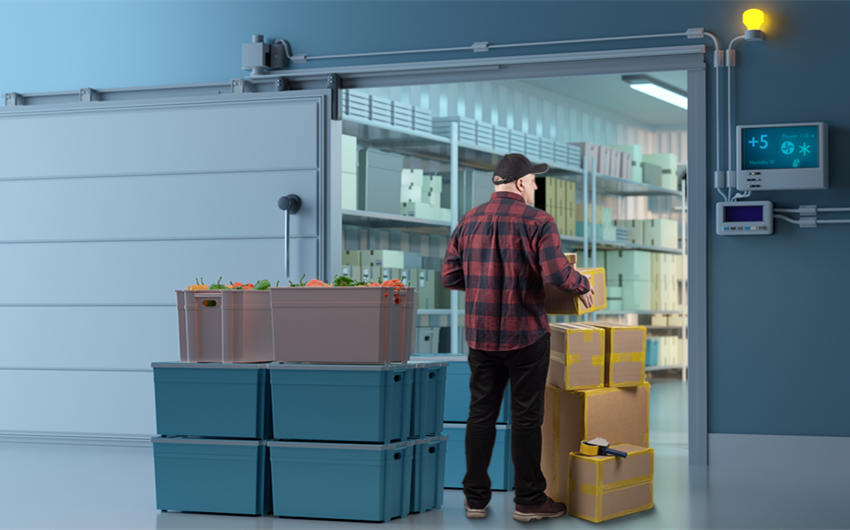
Before food ever gets loaded onto a truck, it often spends time in temperature-controlled storage facilities. These warehouses are carefully monitored environments where different zones are maintained at specific temperature ranges depending on the product.
For example, fresh produce may be stored just above freezing, while dairy products require steady refrigeration. And then you have frozen foods, which must remain well below zero degrees Fahrenheit. Sensors are able to track temperatures continuously and set off alarms to alert staff if conditions go outside the acceptable limits.
Modern cold storage facilities also use things like insulated walls and backup power sources to prevent temperature fluctuations in the first place. They know that even a brief power outage can threaten large quantities of product, so redundancy is built into the system.
Refrigerated Freight and Logistics
Once food leaves the warehouse, temperature-controlled freight takes over. Refrigerated trucks, railcars, air cargo, and shipping containers – often referred to as “reefers” – are specifically designed to maintain consistent temperatures during transit. These vehicles are equipped with built-in refrigeration units that can be set to precise temperature ranges. In many cases, digital tracking systems allow real-time temperature data to be viewed remotely.
Timing is crucial here. The longer the food spends in transit, the greater the risk of temperature shifts. That’s why cold chain logistics companies carefully plan routes and coordinate unloading schedules with distribution centers and supermarkets.
Even loading and unloading procedures are tightly controlled. Dock areas at distribution centers are often refrigerated, and trailers are connected to power sources while waiting. The goal is to avoid any “temperature shock” that could compromise product integrity.
Distribution Centers
Before reaching individual supermarkets, most products pass through regional distribution centers. These facilities function as hubs where large shipments are broken down into smaller deliveries for specific stores.
Like storage warehouses, distribution centers maintain multiple temperature zones. Frozen goods stay frozen, refrigerated goods remain chilled, and fresh produce is handled separately. Employees are trained to move products quickly between zones to prevent warming.
Inventory management systems then track shelf life and rotation schedules. Products are strategically shipped out based on expiration dates to reduce waste and ensure freshness at the store level.
Supermarket Receiving and Storage
When shipments arrive at the supermarket, the cold chain still isn’t finished. Store staff have to verify that the product arrived at the correct temperature before accepting delivery. Many retailers use handheld temperature scanners or embedded sensors to confirm compliance.
After acceptance, products move quickly into refrigerated backrooms or freezers. These areas are monitored just like larger warehouses, with temperature logs and automated alerts in place.
From there, items are stocked in display cases designed to maintain consistent airflow and cooling. Open-air refrigerated cases may look exposed, but they use carefully engineered air curtains to keep cold air circulating inside.
Frozen food freezers are just as precise, maintaining steady subzero temperatures at all times. Even lighting inside these cases is chosen carefully to avoid generating excess heat.
Why Consistency Matters
When you reach into a refrigerated case at the grocery store, you’re interacting with the final step in a highly coordinated system. Long before that carton of milk or package of chicken reached the shelf, it traveled through temperature controlled storage facilities, refrigerated freight networks, and monitored distribution hubs.
The cold chain works because every link matters. If one stage fails, the entire system is compromised. But when each segment performs as designed, food stays cold (and safe) from farm to supermarket. And that’s the beauty of the cold chain!