Warehouse Equipment Safety Tips Every Team Should Follow

Warehouse teams can’t operate without heavy equipment, but large machinery creates an environment full of risks that need to be properly addressed to avoid. Accidents can happen at any time, but the risk is even greater when equipment is used improperly or unmaintained.
Creating a safe warehouse requires that all employees understand how to operate machinery safely, recognize and react to potential hazards, and follow all safety procedures. By adopting the following best practices, warehouse teams can reduce accidents and keep operations smooth.
1. Prioritize training before operating equipment
One of the most important safety measures any warehouse can implement is proper training. Workers should never operate equipment after watching someone else using it or based on previous experience at a different workplace. They need fresh training. Some new hires might come to the job already trained and skilled, but employers still need to go through the training process to verify and reinforce proper operation. This applies to all equipment, including forklifts, pallet jacks, ladders, WAVE machines, conveyors, and even balers.
Every warehouse has a unique layout and different workflows. Providing every new hire with comprehensive training helps teams operate equipment safely according to their roles. This is especially important for powered industrial equipment like forklifts. Tens of thousands of workers are injured every year in forklift accidents that could have been prevented.
While OSHA requires forklift operators to receive formal training, sometimes workers ignore what they’ve been taught. Forklift certification combined with ongoing training and policy enforcement is the best way to avoid this problem.
2. Conduct inspections prior to using equipment
Workers should be trained to inspect equipment before each use. Small issues that get ignored can lead to equipment failure that can injure workers. Before using any piece of equipment, workers should perform a routine inspection based on company protocols. This might include visually inspecting tires, checking breaks, verifying warning devices are operational, checking fluid levels, and testing safety guards. If anything isn’t working as it should, the issue should be reported right away.
3. Follow manufacturer guidelines
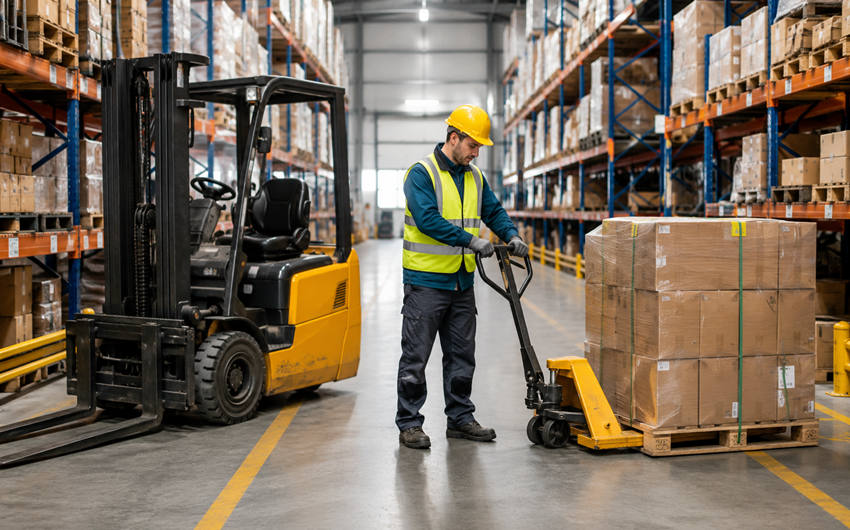
Every piece of warehouse equipment is designed to operate within set limits. If these limits are exceeded, it can cause unnecessary wear and tear on the equipment and reduce stability to the point of creating dangerous conditions. Employees need to understand and follow all load capacities based on the manufacturer’s recommendations for safe use. For example, when a forklift operator ignores the rated capacity, the forklift is at risk for tipping over, especially when rounding corners. Likewise, overloaded pallet jacks can be difficult to control at any speed.
4. Prioritize maintenance
Regular equipment maintenance is essential for maintaining a safe warehouse environment. A simple preventive maintenance program will identify worn parts before they fail. This requires regular inspections and scheduled service intervals for lubrication and repairs.
5. Separate pedestrians and equipment
Many warehouse accidents happen when pedestrians and moving machinery are too close together. It’s critical to have designated pedestrian walkways with clearly marked routes for equipment to reduce the risk of collisions. It helps to place physical barriers, floor markings, and warning signs where appropriate, along with adding mirrors to intersections.
Sometimes it’s not possible to completely separate pedestrians from equipment, and that’s why everyone is responsible for maintaining awareness at all times. Setting speed limits and enforcing violations will help by either forcing workers to correct their risky behavior or terminating their employment.
6. Ensure protective equipment is used properly
Personal protective equipment adds a layer of protection but doesn’t eliminate hazards. Still, it plays a critical role in maintaining a safe work environment. If employees are required to wear protective gear like safety shoes, high-visibility clothes, gloves, hard hats, eye protection, or hearing protection, make sure everyone follows through. Any equipment provided by the company should be in good working order and available at all times. For example, there should be a dedicated station, where employees can pick up ear plugs or goggles, that remains stocked at all times.
7. Create a safety-first culture
Equipment safety requires support from the organization. Employees need to know they can report hazards and speak up when something looks unsafe. They should feel comfortable stopping a task if they believe their safety is at risk rather than feeling pressured to complete it anyway.
Safe equipment practices support success
Working in a warehouse comes with risks, but proper training and enforced safety protocols create a safer work environment. By prioritizing equipment safety, warehouse teams can reduce avoidable injuries, minimize downtime, and create a workplace culture where employees feel valued and protected. The result is a safer work area and a more productive team.